
Coliving for Introverts: How Shared Living Can Work Beautifully for People Who Need Alone Time
Coliving and introverts: at first glance, they seem like a mismatch. Coliving emphasises community, shared spaces, and social interaction. Introverts, by c…
Coliving and introverts: at first glance, they seem like a mismatch. Coliving emphasises community, shared spaces, and social interaction. Introverts, by common understanding, find social interaction draining and need significant alone time to recharge. Surely, the argument goes, introverts would be better served by a quiet independent apartment where they can control their social exposure entirely?
This argument has intuitive appeal but misunderstands both introverts and coliving. In practice, many introverts thrive in well-designed coliving environments and HelloWorld's properties, in particular, are designed in ways that serve introvert residents exceptionally well. This blog explains why.
What Introversion Actually Means
The popular understanding of introversion as simply being shy or antisocial is a significant oversimplification. Introversion, as the concept is used in psychology, primarily refers to where a person gets their energy. Extroverts are energised by social interaction; introverts find sustained social interaction depleting and need time alone to restore their energy.
This does not mean introverts dislike people or avoid social interaction. Many introverts have rich, active social lives and deeply value their relationships. What they need is the ability to control the intensity and duration of social exposure to choose when they engage and to have genuine private space when they need to recharge.
This distinction is crucial for understanding why coliving works for introverts. The question is not whether coliving involves social interaction it does. The question is whether it gives introverted residents the private space and autonomy they need alongside those social opportunities.
The Private Room: The Foundation of Introvert-Friendly Coliving
The most important factor that makes coliving work for introverts is the private room. HelloWorld's coliving properties provide fully private rooms spaces that belong entirely to the resident and into which no one enters without invitation.
This private room is an introvert's sanctuary: a place to decompress, process the day, work quietly, read, think, and simply be alone with their thoughts. After a day at work full of meetings and interactions, or an evening in the common area connecting with fellow residents, the private room provides complete restoration time.
The structure of a good coliving property private rooms for rest and personal time, shared spaces for optional social interaction is actually close to the ideal social architecture for an introvert. You have complete control over your social exposure. The door to your room is a genuinely meaningful boundary.
Optional Community: The Key Word Is Optional
A misunderstanding of coliving one that many potential introvert residents have is that community participation is compulsory or that constant social interaction is expected. In reality, HelloWorld's community events and social activities are entirely optional. Residents participate as much or as little as they choose.
An introvert living in a HelloWorld property might spend three evenings a week in their private room, one evening in the common lounge, and one at a community event. This is entirely normal and entirely accepted within the community culture. There is no social pressure to perform extroversion.
What this arrangement provides is something genuinely valuable for introverts: social connection on their own terms. The community is there when you want it and absent when you do not. This is far better than the isolation of an independent apartment, where building any social connection requires the significantly more exhausting process of going out and actively pursuing social engagement from scratch.
The Paradox: Coliving Reduces Social Anxiety for Many Introverts
Many introverts find that the threshold for social interaction in a coliving environment is significantly lower than in other contexts, which paradoxically makes it easier for them to engage socially than they expected.
In an independent apartment or a traditional PG, making social connections requires deliberate, high-effort action: going to a networking event, striking up a conversation with a complete stranger, finding and joining social groups. For introverts, these activities are exhausting and anxiety-inducing.
In a HelloWorld coliving space, social connection happens through low-effort, low-stakes interactions: a conversation in the kitchen while making coffee, a chance encounter in the corridor, a brief exchange in the common room. These interactions do not require the performance of full social engagement. They are brief, natural, and genuinely pleasant without being depleting.
Over time, these repeated low-intensity interactions build genuine familiarity and friendship which is how most introverts actually prefer to build relationships anyway. The depth-over-breadth approach to social connection that characterises most introverts is well served by the coliving environment.
Design Features That Work for Introverts in HelloWorld Properties
Beyond the private room, HelloWorld's properties include several design features that work particularly well for introverts.
Coworking spaces: A dedicated work area separate from the bedroom and the social common areas creates a focused, relatively quiet work environment that suits introverts who need concentration for professional or academic work.
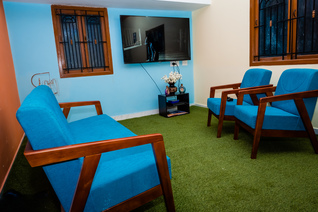
Multiple common area zones: The best HelloWorld properties do not have a single large, always-loud common space but several smaller zones with different energy levels a quiet reading lounge, a more social television area, a kitchen for cooking and casual conversation. Introverts can navigate between these zones based on their energy level and social needs at any given moment.
Private outdoor spaces: Where available, rooftop areas or garden spaces offer a middle ground between the full privacy of a bedroom and the social density of a shared lounge somewhere to be alone outdoors, which many introverts find restorative.
Practical Tips for Introverts Choosing a HelloWorld Property
If you are an introvert evaluating HelloWorld properties, here are the specific things to look for:
Room soundproofing: During your property visit, spend time in a bedroom and assess how much sound travels from common areas. Good soundproofing is essential for an introvert who needs genuine quiet time in their room.
Community culture and size: Smaller communities (15-30 residents) can actually be more manageable for introverts than very large ones (100+ residents), because the social interactions are more predictable and the community culture more intimate.
Common area design: Look for properties with multiple common area zones at different energy levels rather than a single large social space.
Management culture around events: Ask about whether community events are genuinely optional or implicitly expected. The answer tells you a lot about whether the property's community culture will work for you.
Introverts Who Have Thrived in HelloWorld Communities
The lived experience of introvert residents in HelloWorld communities is an important data point. A significant proportion of HelloWorld's residents are self-identified introverts technology professionals, researchers, writers, and others who value solitude and deep thinking but also recognise the importance of social connection for a fulfilling life.
Many of these residents report that their time in HelloWorld coliving was one of the richest social periods of their lives not because they were forced into social interaction, but because the right architecture of private and shared space made social connection accessible on their terms. Friends made in HelloWorld communities by introvert residents are often cited as among the closest of their adult lives precisely because coliving allows for the slow, deep relationship development that introverts prefer.
Conclusion
Coliving is not just for extroverts. For introverts who want genuine social connection without sacrificing the private space they need to thrive, HelloWorld's coliving model with its fully private rooms, optional community programming, and thoughtfully designed multi-zone common areas can be close to the ideal living arrangement.
The key insight is that good coliving gives you control: control over when you engage, how much you engage, and how deeply you engage. For introverts, control is everything. HelloWorld gives you that.
Explore introvert-friendly HelloWorld properties across India at HelloWorld.
Other topics
Browse more articles on HelloWorld—jump to a topic page to see every post in that area.
Similar blogs
 •8 min readThe Strategic Transit Core—The 2026 Guide to PG and Coliving Near Baiyappanahalli Metro Station, Bangalore
Welcome to the ultimate connectivity anchor of East Bangalore. In April 2026, Baiyappanahalli Metro Station stands as more than just the bustling terminal…
 •7 min readThe Tech-Life Revolution - Your Strategic Guide to PG and Coliving Near Prestige Tech Park, Bangalore (2026 Edition)
Welcome to the beating heart of India’s Silicon Valley. In April 2026, Prestige Tech Park (PTP) on Marathahalli-Sarjapur Outer Ring Road (ORR) has solidifi…
 •8 min readThe Integrated Enclave Lifestyle—The 2026 Ultimate Guide to PG and Coliving Near Orion Mall & Brigade Gateway, Bangalore
Welcome to the pinnacle of integrated urban living in West Bangalore. In April 2026, Orion Mall at Brigade Gateway is far more than just a premium shopping…
 •8 min readThe Silicon Valley of South Bangalore—The 2026 Ultimate Guide to PG and Coliving Near Global Village Tech Park, ISRO Layout, Bangalore
Welcome to the serene yet high-powered tech corridor of South-West Bangalore. In April 2026, Global Village Tech Park (GVTP) in Rajarajeshwari Nagar (RR Na…