
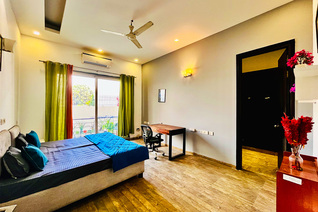
The Future of Urban Housing in India: Why Coliving Is Here to Stay
India is in the middle of one of the largest urban transformations in human history. Over the next two decades, hundreds of millions of people will migrate…
India is in the middle of one of the largest urban transformations in human history. Over the next two decades, hundreds of millions of people will migrate from rural and semi-urban areas to India's cities. The country's urban population, already over 500 million, is projected to grow by an additional 300-400 million by 2050. The housing infrastructure required to accommodate this growth is one of the defining challenges and one of the defining opportunities of modern India.
Within this broader transformation, managed coliving occupies a specific and increasingly important position. This blog explores why coliving is not a passing trend but a structural feature of India's urban housing future, and why HelloWorld is positioned to play a central role in that future.
The Drivers of Urban Migration in India
To understand why coliving has a significant future in India, you need to understand the forces driving urban migration.
Economic opportunity is the primary driver. India's formal economy technology, manufacturing, finance, healthcare, media, logistics is concentrated in its cities. The income premium for urban formal employment over rural or semi-formal employment is substantial and growing. For ambitious young people in smaller towns, moving to a major city is the most reliable path to significantly better economic outcomes.
Educational opportunity is another driver. India's best universities, professional colleges, and coaching institutes are located in cities. Students whose educational aspirations exceed what local institutions can offer must migrate to access the education they need.
Social and cultural opportunity is increasingly a factor as well. India's younger generation is more mobile, more connected, and more aspirational in its expectations for social and cultural experience than any previous generation. Cities offer diversity, stimulation, and social possibility that is simply not available elsewhere.
These three drivers economic, educational, and social opportunity are structural forces that will continue to generate urban migration in India for decades. The housing demand they create is not cyclical. It is permanent and growing.
Why Traditional Housing Models Are Insufficient
India's traditional housing models were not designed for the scale and pace of urban migration the country is experiencing.
The independent rental market is fragmented, opaque, and inefficient. Finding a good apartment involves navigating a chaotic market of individual landlords, unreliable brokers, and variable quality. The financial barriers large deposits, brokerage fees, furnishing costs are prohibitive for many migrants, particularly those in the early stages of their careers.
Traditional PG accommodation is abundant but highly variable in quality and entirely unregulated. The risks of poor management, inadequate safety, and opaque billing fall entirely on residents, with limited recourse when things go wrong.
New construction-based housing is largely inaccessible to young professionals and students in the prime working-age years they are not yet at a stage in their careers or financial lives where home ownership is a realistic aspiration.
This leaves a massive gap in the housing market that managed coliving is uniquely positioned to fill.
Coliving as a Structural Solution
Managed coliving addresses multiple housing market failures simultaneously, which is why it is growing rapidly and why its growth shows no signs of slowing.
For residents, it provides quality accommodation at accessible prices with transparent billing, flexible leases, and professional management. It solves the social isolation problem that urban migration often creates. It eliminates the financial barriers of large deposits and furnishing costs.
For the housing market more broadly, it provides a model for converting existing residential stock into professionally managed, higher-density, higher-quality accommodation. This is more capital-efficient than new construction and faster to deploy.
For cities, the concentration of young professionals in well-located, well-managed coliving properties rather than scattered across poorly maintained, unmanaged rentals has positive externalities for neighbourhood quality, energy efficiency, and urban density.
Technology's Role in Scaling Coliving
The managed coliving model is only viable at scale because of technology. Digital property management, online booking platforms, mobile payment systems, community apps, and data-driven operational optimisation all enable professional coliving operators like HelloWorld to manage large, geographically distributed portfolios with quality consistency that would be impossible with manual processes alone.
HelloWorld's technology platform is not just a booking interface it is the operational backbone of the company's ability to maintain quality, manage communities, and serve residents across hundreds of properties in 16+ cities.
As technology continues to improve and as artificial intelligence, predictive maintenance, smart building systems, and digital community management tools mature the quality and cost efficiency of managed coliving operations will continue to improve.
HelloWorld's Vision for the Future
HelloWorld has been explicit about its ambitions: to be the dominant managed accommodation platform for India's urban professional and student population. With 250+ properties and 25,000+ community members today, the company has already built one of the largest managed accommodation networks in the country.
The next phase of growth involves deeper penetration in existing cities, expansion into additional tier-2 and tier-3 cities that are growing rapidly as professional destinations, and continued investment in the technology and community platforms that make the HelloWorld experience distinctive.
As India's urban population grows, as the professional class expands, and as expectations for quality managed accommodation rise, HelloWorld is positioned to serve an increasingly large and demanding market.
Conclusion
The future of urban housing in India is managed, community-oriented, technology-enabled, and flexible. Coliving is not a niche product for a specific demographic it is a structural response to the housing challenges created by one of history's largest urban transformations.
HelloWorld is at the forefront of building this future. Join the community at HelloWorld.
Other topics
Browse more articles on HelloWorld—jump to a topic page to see every post in that area.
Similar blogs
 •7 min readThe Ultimate 2026 Guide to PG and Coliving near Qspiders Rajajinagar — Your Career Launchpad
When you decide to join Qspiders in Rajajinagar, you aren't just enrolling in a training institute; you are entering the "Skill-Up Capital" of Bangalore. I…
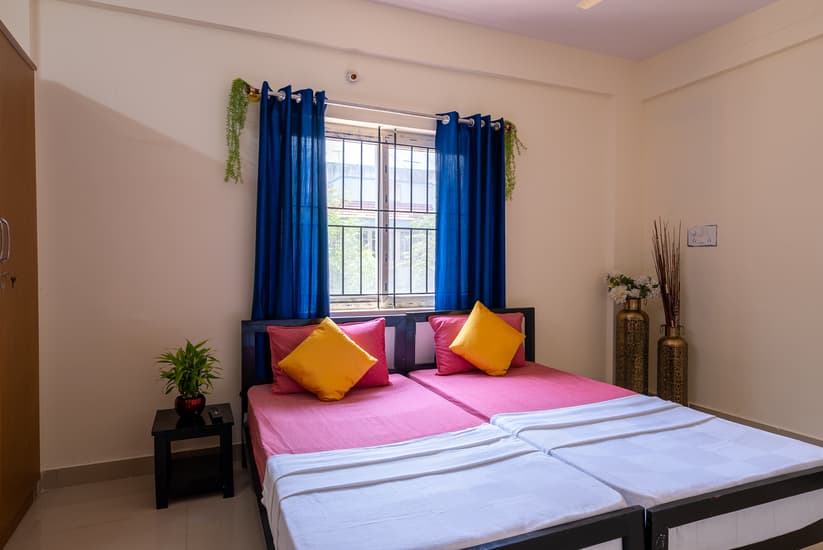 •8 min readThe Ultimate Guide to Student Excellence—2026 Edition of PG and Coliving Near Mount Carmel College (MCC), Benson Town, Bangalore
Welcome to the prestigious heart of North-Central Bangalore. In April 2026, Mount Carmel College (MCC) in Vasanth Nagar/Benson Town remains a symbol of aca…
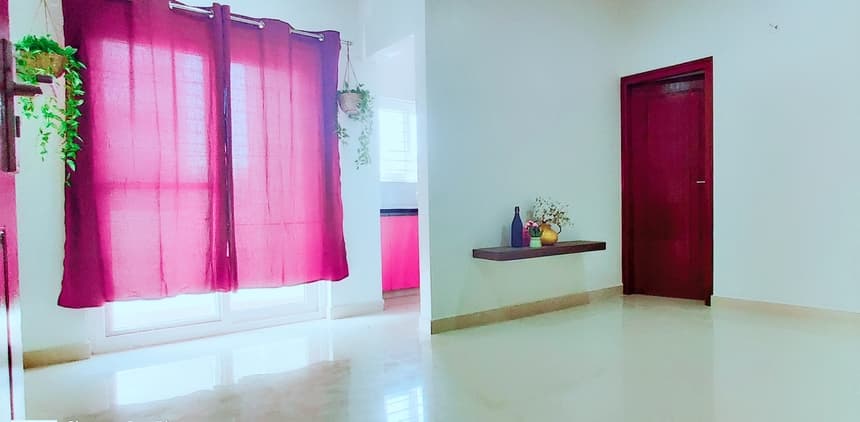 •8 min readThe Ultimate Living Experience on the Golden Quadrilateral—Premium PG and Coliving Near Cessna Business Park, Kadubeesanahalli, Bangalore (2026 Edition)
Welcome to the heart of the "Silicon Mile." In April 2026, Cessna Business Park in Kadubeesanahalli stands as a global landmark of corporate excellence. Ho…
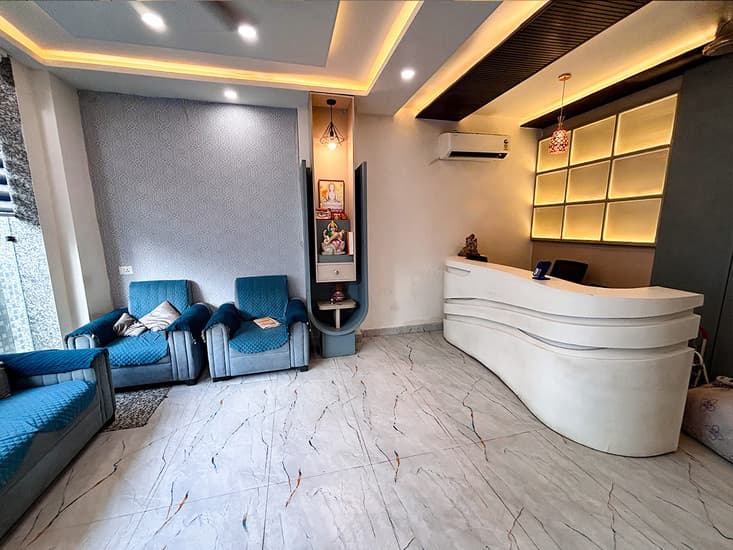 •7 min readThe Ultimate Student & Professional Hub—2026 Guide to PG and Coliving Near Jain University, Bangalore
Welcome to the vibrant heart of Bangalore’s academic excellence. In April 2026, Jain University remains a powerhouse of innovation, entrepreneurship, and s…