

How HelloWorld's 1-Month Deposit Policy Is Changing the Rental Market in India
In a country where paying six months' rent upfront as a security deposit before moving into an apartment is entirely normal, HelloWorld's one-month deposit…
In a country where paying six months' rent upfront as a security deposit before moving into an apartment is entirely normal, HelloWorld's one-month deposit policy is genuinely radical. It may not sound like a dramatic innovation it is, after all, a simple policy about how much money a tenant has to put down before moving in. But its implications for young professionals, students, and urban migrants across India are profound. This blog examines why the deposit problem is so serious, how HelloWorld's approach solves it, and what it means for the future of Indian rental housing.
The Indian Security Deposit Problem: How Bad Is It Really?
To understand why a one-month deposit policy is significant, you need to understand just how extreme India's rental deposit culture has become in some markets.
In Bangalore, it is entirely common for landlords to demand six months' rent as a security deposit. In some cases, particularly for premium apartments, the demand can reach ten months. This is not a legal requirement Indian tenancy law does not mandate any specific deposit amount but it has become a standard market practice that tenants are essentially forced to accept if they want accommodation in the city's most sought-after areas.
Consider what this means in practice. A working professional seeking a 1BHK apartment in Koramangala, Bangalore at Rs 22,000 per month will be expected to pay a security deposit of Rs 1,32,000 to Rs 2,20,000. Add broker's commission of Rs 22,000 and the first month's rent, and the total upfront payment before sleeping a single night in the apartment is Rs 1,76,000 to Rs 2,64,000.
For a professional in their mid-twenties who has just joined a company after college, and whose net monthly salary might be Rs 40,000-60,000, this represents three to six months of entire salary paid upfront before accounting for moving costs, furnishing the apartment, or any other expenses associated with relocation.
The practical result is that many young professionals are forced into lower-quality accommodation than they would prefer simply because they cannot mobilise the required deposit capital. Others take loans or borrow from family, starting their independent lives with financial stress that is entirely avoidable.
The Deposit Trap: A Structural Problem
The large deposit culture in Indian cities is not purely about landlord greed. It reflects structural features of the Indian rental market: weak tenancy law enforcement, limited dispute resolution mechanisms, and a historical context where tenants in some states could accumulate tenancy rights that made eviction almost impossible. Landlords learned to demand large deposits as a form of protection against multiple risks simultaneously.
But the solution to the landlord's legitimate risk-management needs does not have to be an enormous financial burden on tenants. More transparent tenancy agreements, professional property management, and digital payment trails all address landlord risks more effectively than large deposits and without forcing tenants to mobilise unreasonable capital upfront.
HelloWorld's One-Month Deposit: The Policy and Its Rationale
HelloWorld standardises the security deposit at one month's rent across all of its properties. This is not just a marketing positioning it reflects a fundamentally different approach to the landlord-tenant relationship.
HelloWorld operates as a professional property management company, not as an individual landlord. This means the risks that drive individual landlords to demand large deposits are managed through professional systems and processes, not through financial hostage-taking of tenants.
Tenant vetting, professional management of the property, clear contractual terms, and well-documented move-in and move-out processes all reduce the risks that large deposits are ostensibly meant to cover. HelloWorld can afford to charge only one month's deposit because it manages its properties in ways that individual landlords typically cannot.
The result is a system that is fairer for everyone tenants are not burdened with unreasonable upfront costs, and HelloWorld manages its property risks through professional practices rather than financial barriers.
What One Month's Deposit Means for Young Professionals
The financial liberation created by a one-month deposit policy is significant and concrete.
A professional moving into a HelloWorld coliving room at Rs 14,000 per month pays Rs 14,000 as a deposit. They bring their personal belongings and move in. There is no brokerage, no separate utility setup costs, no furniture to buy. The total financial commitment to begin their new life in a new city is Rs 28,000 (one month deposit plus one month's rent in advance).
Compare this to the Rs 1,76,000-2,64,000 upfront cost of a traditional Bangalore apartment, and the magnitude of the difference is clear. The HelloWorld approach puts quality accommodation within financial reach of professionals and students who would otherwise be forced to compromise on their living situation.
The No-Brokerage Commitment
Alongside the one-month deposit, HelloWorld's no-brokerage policy is another significant financial advantage that deserves attention.
In India's unorganised rental market, brokers play an enormous role in connecting landlords with tenants. Their commission, typically one month's rent paid by the tenant, is an accepted if resented feature of the market. For a professional renting a Rs 20,000 apartment, this represents Rs 20,000 paid for a service that consists primarily of arranging a few property viewings.
HelloWorld eliminates brokerage entirely. The platform acts as a direct connection between the property and the resident, with no intermediary taking a commission cut. For residents who move multiple times in their early careers which is common this saving accumulates into a significant financial advantage over time.
The Refund Process: Transparency at the End of Tenancy
The deposit problem in India is not just about how much is demanded upfront it is also about how reliably it is returned at the end of tenancy. Disputes over deposit returns are one of the most common sources of tenant grievances in the Indian rental market. Landlords frequently withhold portions of deposits for reasons that tenants dispute, and the legal mechanisms for resolving these disputes are slow and cumbersome.
HelloWorld's professional management approach brings clarity and accountability to the move-out process. Clear documentation of the property's condition at move-in creates an objective baseline against which move-out conditions can be compared. Professional management of the refund process, with defined timelines and transparent deduction policies, ensures that residents get their deposit back quickly and fairly.
What This Means for the Rental Market
HelloWorld's approach is not just beneficial for individual residents it is demonstrating what the Indian rental market can look like when professional management replaces ad hoc landlord relationships.
The growing adoption of the managed coliving model across India is gradually establishing new norms: lower deposits, transparent pricing, professional management, and fair tenancy terms. As more professionals experience these norms through HelloWorld and similar platforms, their expectations of the broader rental market will rise accordingly.
This is how markets evolve: by demonstrating that a better model is possible, well-run operators raise the standards of the entire sector. HelloWorld is playing this role in the Indian rental market.
Conclusion
The one-month deposit policy is simple in its mechanics and revolutionary in its implications. It removes one of the most significant financial barriers that young professionals and students face when moving to a new city, making quality managed accommodation accessible to people who would otherwise be priced out of the best options.
Combined with no brokerage, all-inclusive transparent pricing, and professional management, HelloWorld's approach to the deposit question is part of a comprehensive reimagining of what the Indian rental experience can be.
Experience the HelloWorld difference across 16+ cities at HelloWorld.
Other topics
Browse more articles on HelloWorld—jump to a topic page to see every post in that area.
Similar blogs
 •7 min readThe Ultimate 2026 Guide to PG and Coliving near Qspiders Rajajinagar — Your Career Launchpad
When you decide to join Qspiders in Rajajinagar, you aren't just enrolling in a training institute; you are entering the "Skill-Up Capital" of Bangalore. I…
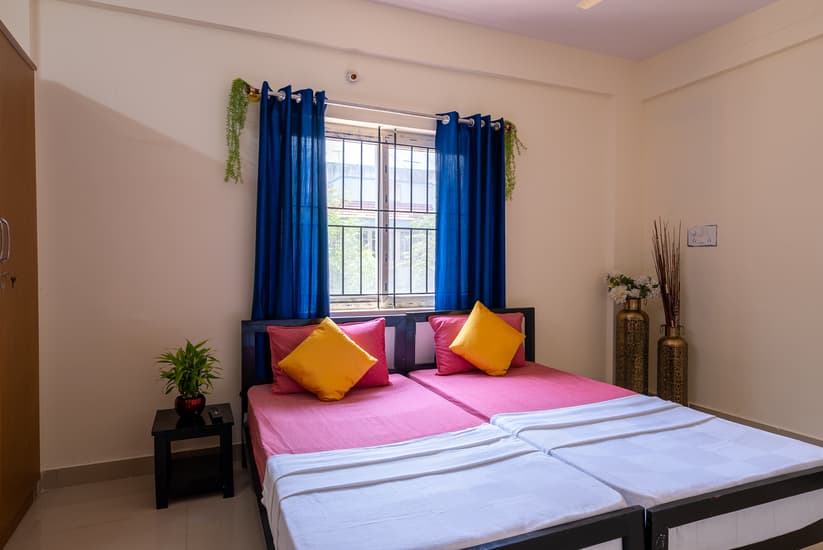 •8 min readThe Ultimate Guide to Student Excellence—2026 Edition of PG and Coliving Near Mount Carmel College (MCC), Benson Town, Bangalore
Welcome to the prestigious heart of North-Central Bangalore. In April 2026, Mount Carmel College (MCC) in Vasanth Nagar/Benson Town remains a symbol of aca…
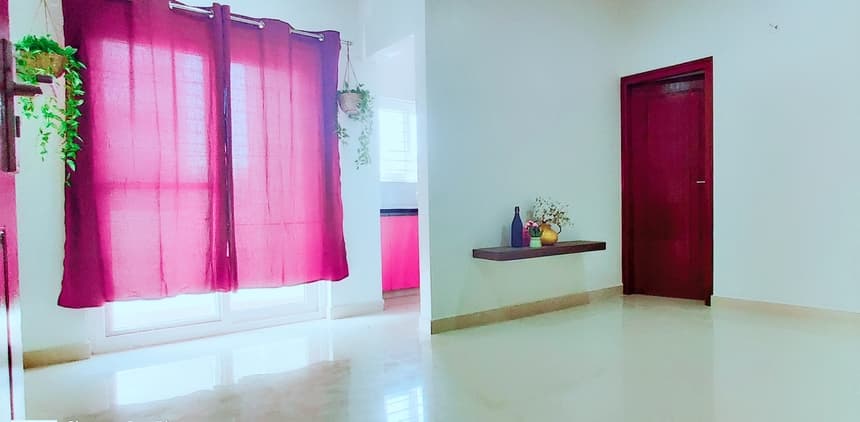 •8 min readThe Ultimate Living Experience on the Golden Quadrilateral—Premium PG and Coliving Near Cessna Business Park, Kadubeesanahalli, Bangalore (2026 Edition)
Welcome to the heart of the "Silicon Mile." In April 2026, Cessna Business Park in Kadubeesanahalli stands as a global landmark of corporate excellence. Ho…
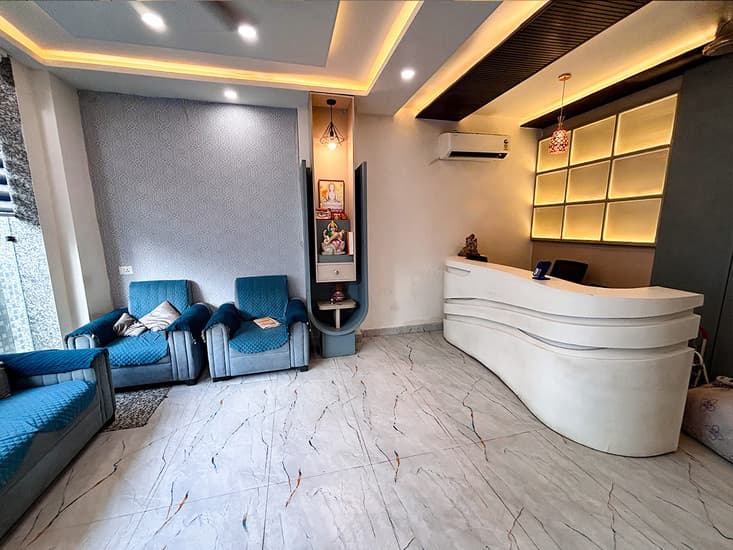 •7 min readThe Ultimate Student & Professional Hub—2026 Guide to PG and Coliving Near Jain University, Bangalore
Welcome to the vibrant heart of Bangalore’s academic excellence. In April 2026, Jain University remains a powerhouse of innovation, entrepreneurship, and s…